

A lot of people feel relieved once they finally sign their estate planning documents. That part makes sense. The binder is on the shelf, the signatures are done, and it feels like one more important task is behind you.
But an estate plan can be signed and still be out of date.
That happens more often than many families expect. A plan created years ago may still be legally valid, but it may name the wrong trustee, an outdated beneficiary, an agent under power of attorney who no longer makes sense, or a guardian choice that no longer fits the family. Sometimes the problem is not that documents are missing. It is that life kept moving and the documents did not.
Estate planning is more than a will
For Colorado families, this matters during life as much as after death. Estate planning is not only about who receives property someday. It is also about who can act for you if you cannot manage financial or medical decisions yourself.
That is one reason a review should look at the whole picture together: wills, trusts, beneficiary designations, asset titles, financial powers of attorney, medical decision-making documents, and the people named in each role. If one part has changed, the rest of the plan may need attention too.
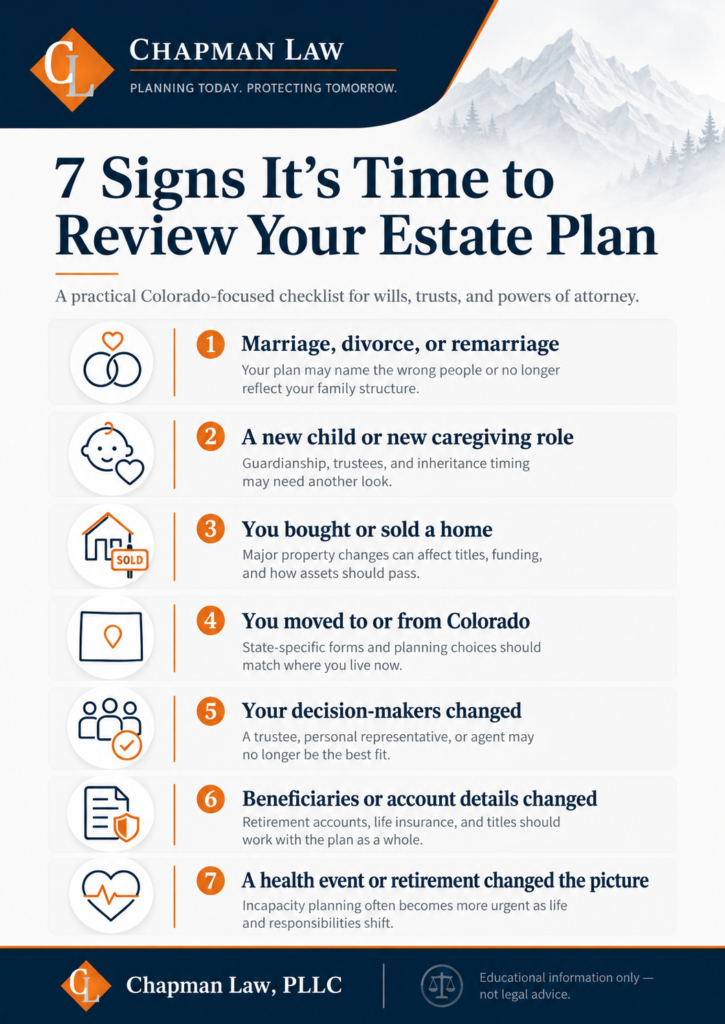
7 times Colorado families should review an estate plan
- After marriage, divorce, or remarriage. A relationship change can affect who should inherit, who should serve in decision-making roles, and how the plan should be structured for a spouse, children, or a blended family.
- After the birth or adoption of a child, or a major change in caregiving responsibilities. If you have minor children, it is worth reviewing guardian nominations, trustee choices, and how money would be managed if something unexpected happened.
- After buying or selling a home or another major asset. Real estate, business interests, and larger investment changes can affect how property is titled, whether a trust is funded correctly, and whether the plan still works the way you intended.
- After moving to Colorado or moving out of state. State law and state-specific forms matter. A move is a good time to make sure your plan still fits where you live and the rules that apply there.
- After a death, illness, or major change involving a person you named. A personal representative, trustee, guardian, or agent under power of attorney may no longer be the right person, or may no longer be willing or able to serve.
- After large changes in accounts, beneficiaries, or property ownership. Retirement accounts, life insurance, payable-on-death designations, and joint ownership choices should work with the rest of the plan rather than against it.
- After a health event, retirement transition, or growing concern about incapacity. This is often when families realize their financial and medical decision-making documents need as much attention as their will or trust.
What this can look like in real life
Think about a Denver couple who signed basic documents before buying their current home, before their children got older, and before one spouse took on more of the family’s financial responsibilities. The names in the documents may still be usable, but the plan may not reflect how the family actually functions now.
Or think about a Pueblo family helping an aging parent. Maybe the documents still name a sibling who has health issues of their own, or maybe the plan says very little about who should handle bills, speak with doctors, or manage practical details if capacity declines. The plan exists. The real question is whether it still works.
What to review during an estate plan checkup
- Does your will still reflect your wishes and the right people?
- If you have a trust, is it funded the way it should be?
- Do your beneficiary designations still make sense?
- Are your financial and medical decision-makers still the right fit?
- Do you want clearer instructions for sentimental items, digital access, or memorial preferences?
A good review is usually less about dramatic rewrites and more about alignment. The goal is to make sure the plan on paper still matches your family, your property, and the people you trust to act when needed.
FAQ
How often should you review an estate plan in Colorado?
Many families should revisit their plan after major life events and also after several years have passed without a review. The right timing depends on what has changed in your family, assets, and decision-making roles.
Does a will by itself avoid probate in Colorado?
Not usually. A will is important, but it is only one part of an estate plan. Whether probate is required often depends on the type of assets involved, how they are titled, and whether they pass through other planning tools such as trusts or beneficiary designations.
Should powers of attorney be reviewed too?
Yes. Financial and medical decision-making documents can become outdated just as easily as a will or trust, especially if the person named is no longer the best choice.
Should I update my estate plan?
Estate planning is not just about documents. It is about making your wishes clear and making things easier for the people you love. If your family, property, or decision-makers look different than they did when you first signed your plan, a review is usually a practical next step. Not sure whether your current documents still match your life? Chapman Law can review your will, trust, powers of attorney, beneficiary designations, and related planning documents with you. We serve clients from our Denver Tech Center and Pueblo offices. Contact us to schedule an estate plan review.
Information shared here is general educational information and is not legal advice. Every situation is different, and you should speak with an attorney about your specific circumstances.