

Most estate plans still live on paper. Most of daily life does not. Bank statements arrive by email. Family photos sit in the cloud. Bills renew automatically. A phone receives the two-factor code needed to open nearly everything else. A business owner may also depend on a domain name, online...
Do I Need a Trust, or Is a Will Enough?
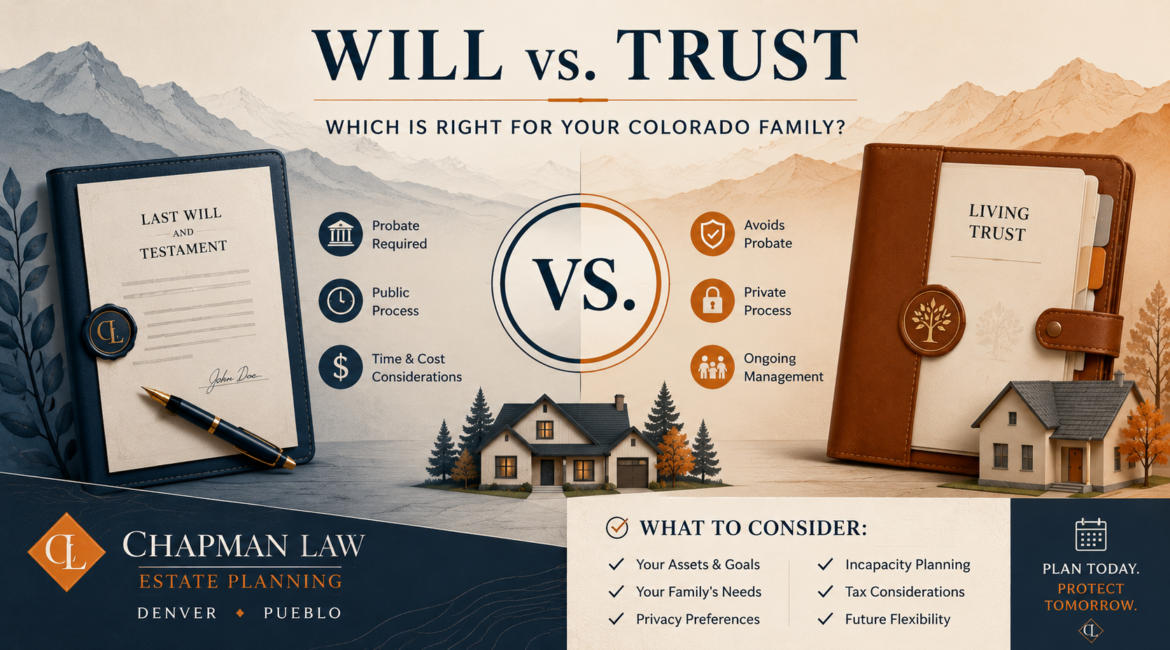
One of the most common estate planning questions we hear is also one of the hardest to answer with a quick online search: Do I need a trust in Colorado, or is a will enough? A lot of articles make this sound like a simple choice. It usually is not....
Does Your Estate Plan Still Fit Your Life? 7 Times Colorado Families Should Review It

A lot of people feel relieved once they finally sign their estate planning documents. That part makes sense. The binder is on the shelf, the signatures are done, and it feels like one more important task is behind you. But an estate plan can be signed and still be out...
Trusts vs. Wills: Navigating Estate Planning with Confidence
Estate planning might not be the most thrilling topic to ponder, but it’s an essential part of ensuring your assets are distributed according to your wishes after you’re gone. The two most common tools for this purpose are wills and trusts. Understanding the benefits of each can help you make...
Understanding Colorado’s Elective Share: Protecting Spouses in Probate Matters
In the complex world of estate planning and probate, one critical aspect that warrants close attention for married Coloradans is the concept of the elective share or spousal share. This provision, outlined in Colorado's statutes serves as a safety net for surviving spouses, ensuring they are not left in a...
Empowering Heirs: Colorado Revised Statute 15-12-912 and Changing Gifting Instructions
In the realm of estate planning and inheritance, the Colorado Revised Statute 15-12-912 stands as a powerful tool for heirs seeking to adapt their loved one's final wishes to changing circumstances. This statute grants heirs the ability to alter a decedent's gifting instructions through a written agreement, ensuring flexibility in...
Estate Plan Basics – Fundamental Components of an Estate Plan
Creating an estate plan might not be at the top of your to-do list, but it's a critical step to ensure your assets are distributed according to your wishes and your loved ones are taken care of in the event of your passing. An estate plan is not just for...
Understanding Probate – How to Avoid Probate
Probate can be a lengthy and costly process that follows the passing of a loved one. In Colorado, as in many other states, the probate process involves the court overseeing the distribution of a deceased person's assets. However, there are proactive steps you can take during your lifetime to potentially...
Understanding “Step Up in Basis”
Estate planning involves making important decisions to ensure that your assets are distributed according to your wishes after your passing. One crucial aspect of estate planning is understanding the concept of "step-up in basis" and utilizing tools like revocable living trusts to maximize the benefits for your beneficiaries. This blog...
Navigating Will Challenges – Undue Influence
The loss of a loved one is undoubtedly a challenging time, and dealing with the distribution of their estate can further complicate matters. In some cases, concerns may arise regarding the validity of a will due to allegations of undue influence. Undue influence refers to situations where an individual exerts...
Navigating Will Challenges – Testamentary Capacity
The passing of a loved one is a time of emotional upheaval, and the last thing on our minds is often the validity of their will. However, it is crucial to understand the significance of testamentary capacity and when to challenge a will when it appears to lack it, especially...
Navigating Will Challenges – The Basics
Inheritance matters are often intricate, encompassing emotions, relationships, and occasionally, legal conflicts. While a last will and testament aim to ensure smooth asset distribution after one's passing, there are instances where individuals may question the validity or fairness of a will under Colorado law. In this blog post, we delve...
Demystifying Trusts: Revocable Living Trusts vs. Irrevocable Trusts
Trusts are powerful legal instruments designed to protect and manage assets, ensuring their efficient distribution according to your wishes. When it comes to estate planning, two popular options emerge: revocable living trusts and irrevocable trusts. Understanding the differences between these two types of trusts is essential to make informed decisions...
Funding a Revocable Living Trust – The Basics
When it comes to estate planning, many individuals are familiar with the concept of a revocable living trust. However, there is a crucial step often overlooked – funding the trust. Funding a revocable living trust is like breathing life into it, ensuring that your hard-earned assets are protected, efficiently managed,...
What is a Living Will? – The Basics
In today's rapidly evolving world, it is crucial to plan for unforeseen circumstances, especially when it comes to our health and medical decisions. A living will is a legal document that outlines an individual's preferences regarding medical treatment and care in the event they become incapacitated or unable to communicate...
What is a Power of Attorney? – The Basics
Estate planning involves making crucial decisions to protect your assets and ensure your wishes are carried out, even if you become incapacitated. Two essential components of estate planning in Colorado are the general power of attorney and medical power of attorney. These legal documents play a vital role in granting...
What is a Personal Property Memorandum? – The Basics
Estate planning is a crucial step in securing the future and ensuring the smooth transfer of assets to loved ones after our passing. While we often focus on major assets like real estate, investments, and financial accounts, it's equally important to address the distribution of our tangible personal belongings. To...
What is Guardianship for Children? – The Basics
When it comes to the safety and security of children, there can never be too many precautions taken. One of the most important steps that parents can take is to establish guardianship for their children in the event that something happens to them. This can provide a sense of peace...
Why is Estate Planning Important? – Celebrity Deaths
Estate planning is an important part of life that everyone should consider. It's not just about having a will, but also about protecting your assets, providing for your family, and ensuring that your wishes are carried out after you're gone. Celebrities are no exception to this rule, and in this...
What is a Pourover Will? – The Basics
A pourover will is a legal document that works in conjunction with a revocable living trust to ensure that any assets not already in the trust are transferred into it upon the death of the grantor. In this post we will explore the basics of pourover wills. How a Pourover...
What is a Living Trust? – The Basics
Estate planning can be an intimidating process, but it is an essential aspect of financial planning that everyone should consider. One popular tool for estate planning is a revocable living trust. In this blog post, we will discuss the basics of what a revocable living trust is and how it...
What is a Will? – Common Issues and Limitations
While a last will and testament is a useful legal document that allows you to dictate how your property and assets will be distributed after your death, there are several common problems with relying solely on a will to manage your estate. In this blog post, we'll discuss some of...
What is Probate? – The Basics
Probate is a legal process that occurs after a person passes away, in which their assets are distributed to their heirs or beneficiaries. In Colorado, the probate process is regulated by the Colorado Probate Code. When a person passes away in Colorado, their estate may need to go through probate...
What is a Will? – The Basics
A last will and testament is a legal document that outlines how a person's property and assets will be distributed after they pass away. In Colorado, the law governs how a person can create a will and what it should include to be considered valid. In this blog post, we'll...
What is an Estate? – Common Nuances
When someone passes away, their assets and property become part of their estate. However, not all assets are subject to probate. Here are some common nuances of what assets become part of a person's probate estate: Assets held in joint tenancy: Assets that are held in joint tenancy with another...
What is an Estate? – The Basics
Probate estate refers to the assets and property of an individual that are subject to probate upon their death. When someone passes away, their assets and property become a part of their estate. The probate process is the legal process by which the decedent's assets are distributed and their debts...